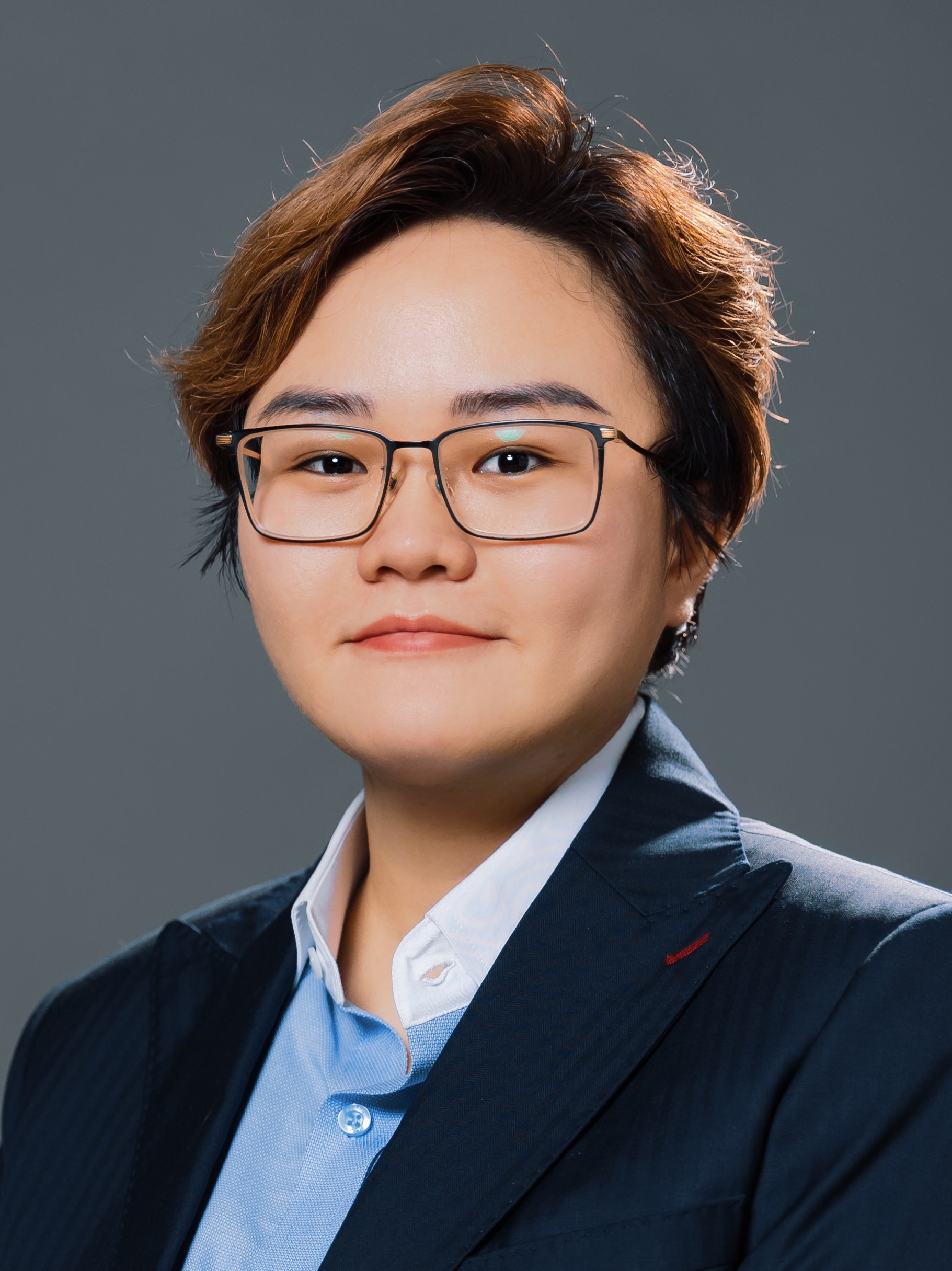
Thao M. Dang
PhD Student in Computer Science
University of Texas at Arlington
Arlington, TX
Email: thaomaidang@gmail.com
Biography
I am a third-year PhD student in Computer Science at the University of Texas at Arlington. My PhD advisor is Prof. Junzhou Huang. I received my M.S. in Computer Engineering from Chonnam National University and B.E. in Computer Engineering from The University of Science-HCMUS.
Seeking Opportunities
I am actively seeking internship opportunities for Summer 2026. My research interests focus on multimodal foundation models, large language models for computational pathology, and AI-driven multi-omics alignment.
Research
- Multimodal Representation Learning and Cross-modal Alignment
- Robust Learning under Incomplete Data
- Multimodal Foundation Models for Computational Pathology
- Guideline-Driven Learning and Prompt Engineering
Publications
Selected publications including AAAI, MICCAI, BCB, ISBI, and journals.
- W. Zhong, H. Li, T. M. Dang, , F. Jiang, H. Ma, Y. Guo, J. Gao, J. Huang , “Learning from Guidelines: Structured Prompt Optimization for Expert Annotation Tasks,” AAAI, 2026.
- T. M. Dang, H. Li, Y. Guo, H. Ma, F. Jiang, Y. Miao, Q. Zhou, J. Gao, J. Huang, “HAGE: Hierarchical Alignment Gene-Enhanced Pathology Representation Learning with Spatial Transcriptomics,” MICCAI, 2025.
- H. Li, Y. Guo, F. Jiang, T. M. Dang, H. Ma, Q. Zhou, J. Gao, J. Huang, “Text-Guided Multi-Instance Learning for Scoliosis Screening via Gait Video Analysis,” MICCAI, 2025.
- T. M. Dang, Q. Zhou, Y. Guo, H. Ma, S. Na, T. B. Dang, J. Gao, J. Huang, “Abnormality-aware Multimodal Learning for WSI Classification,” Front. Med., 2025.
- Q. Zhou, T. M. Dang, , Y. Guo, H. Ma, W. Zhong, S. Na, J. Gao, J. Huang, “Visual-Language Contrastive Learning for Computational Pathology with Visual-Language Models,” ISBI, 2025.
- T. M. Dang, Y. Guo, H. Ma, Q. Zhou, S. Na, J. Gao, J. Huang, “MFMF: Multiple foundation model fusion networks for whole slide image classification,” ACM BCB, 2024.
- T. M. Dang, T. D. Nguyen, T. Hoang, H. Kim, A. B. J. Teoh, D. Choi, “AVET: A Novel Transform Function To Improve Cancellable Biometrics Security,” IEEE Transactions on Information Forensics and Security, 2022.
- T. M. Dang, L. Tran, T. D. Nguyen, D. Choi, “FEHash: Full Entropy Hash for Face Template Protection,” CVPR Workshops, 2020.
Teaching Experience
- CSE 5360 - Artificial Intelligence Fall 2025
- CSE 5360 - Artificial Intelligence Summer 2025
- CSE 5360 - Artificial Intelligence Spring 2025
- CSE 5360 - Artificial Intelligence Fall 2024
- CSE 5311 - Design and Analysis Algorithms Summer 2024
- CSE 5311 - Design and Analysis Algorithms Spring 2024
- CSE 1106 - Introduction to Computer Science and Engineering Fall 2023
Patents
- Personal information security system and method thereof ensuring irreversibility and similarity (US 2025)
- Method and apparatus for applying absolute value equations transform function preserving similarity as well as irreversibility (KR 2024)
- System and method for verifying user by security token combined with biometric data processing techniques (US/KR 2023)
Research Experience
(2023.8-Now) Multimodal Representation Learning with Missing Modalities
- Designed self-supervised multimodal learning frameworks to align heterogeneous data with incomplete modality coverage. Proposed global alignment objectives and geometry-aware losses that enable learning unified embeddings from unimodal, bimodal, and partially observed data without requiring fully paired samples. Manuscript submitted to CVPR 2026.
- Developed novel alignment methods beyond pairwise contrastive learning, including volume-based and hybrid geometric objectives that preserve higher-order semantic structure and improve zero-shot generalization across datasets and modality combinations. Manuscript submitted to CVPR 2026.
- Proposed attention-based fusion and instance selection mechanisms to integrate multi-level representations from multiple pretrained foundation models, enabling scalable learning under sparse, noisy, and high-dimensional multimodal inputs. This work has been accepted to the MICCAI 2025 Conference, Front. Med. 2025 Journal, ACM BCB 2024 Conference.
(2024.10-Now) Multimodal Large Language Model
- Engineered a two-stage adaptation framework to address fundamental limitations in Multimodal Large Language Models (MLLMs) for composed cross-modal retrieval. Formalized the composed retrieval task and developed a comprehensive benchmark for evaluating compositional queries across modalities. Manuscript submitted to CVPR 2026.
- Designed a Vision Language Model framework implementing single-model multi-modal fusion. Replaced dual-encoder architectures with transformer-based deep fusion to capture cross-modal relationships. This work has been accepted to the ISBI 2025 Conference.
(2025.1-Now) Guideline-Driven Learning and Prompt Engineering
- Developed a Guideline-Driven Prompt (GDP) optimization framework that shifts learning paradigm from data-driven training to guideline-driven reasoning with minimal annotated examples. Designed a Retrieval Augmented Generation (RAG) system to extract and synthesize essential fragments from complex guideline documents into structured, executable prompts. This work has been accepted to the AAAI 2026 Conference.
- Engineered RGCWM, a Rule-Grounded Causal World Model for explicit guideline execution and constraint satisfaction. Addressed limitations of implicit text-based reasoning by building an explicit state space directly from guideline text. Manuscript submitted to ACL ARR 2026.
- Designed a text-guided multi-instance learning framework integrating external textual guidance with sequence modeling. Incorporated textual guidance from domain experts and large language models (LLMs) to enhance feature representation. Implemented Dynamic Time Warping (DTW)-based sequence segmentation to handle temporal misalignment in sequential data. This work has been accepted to the MICCAI 2025 Conference.
(2024.6-2024.7) AstraZeneca's Challenge
- Applied SAM (Segment Anything Model) and ensemble learning techniques to improve tumor segmentation accuracy. This work achieved 1st place in the first round and top 3 in the second round of the CoSolve Sprints challenge on 3D MRI mouse cancer segmentation. I am in charge of this project.